Greta Powell · 28 September 2026
Secondary Instructors Engage in Programs to Strengthen Technology Skills Nationwide
Secondary instructors across the United States have joined structured professional development programs designed to build technology integration skills in classrooms; these initiatives run through federal grants, state education agencies, and nonprofit partners that coordinate training schedules aligned with the academic calendar. Data from the National Center for Education Statistics shows that participation rates among high school teachers rose steadily between 2023 and 2025, with cohorts expanding further in the 2026 academic year.
Program Structures and Delivery Models
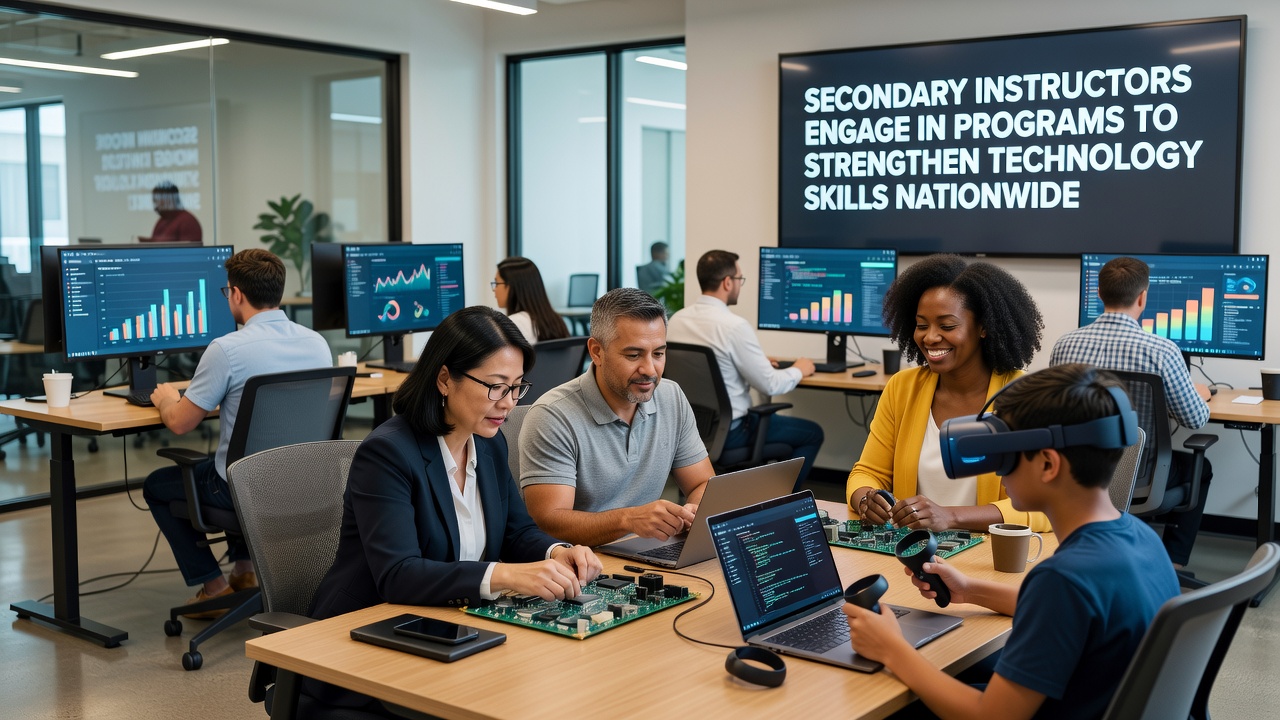
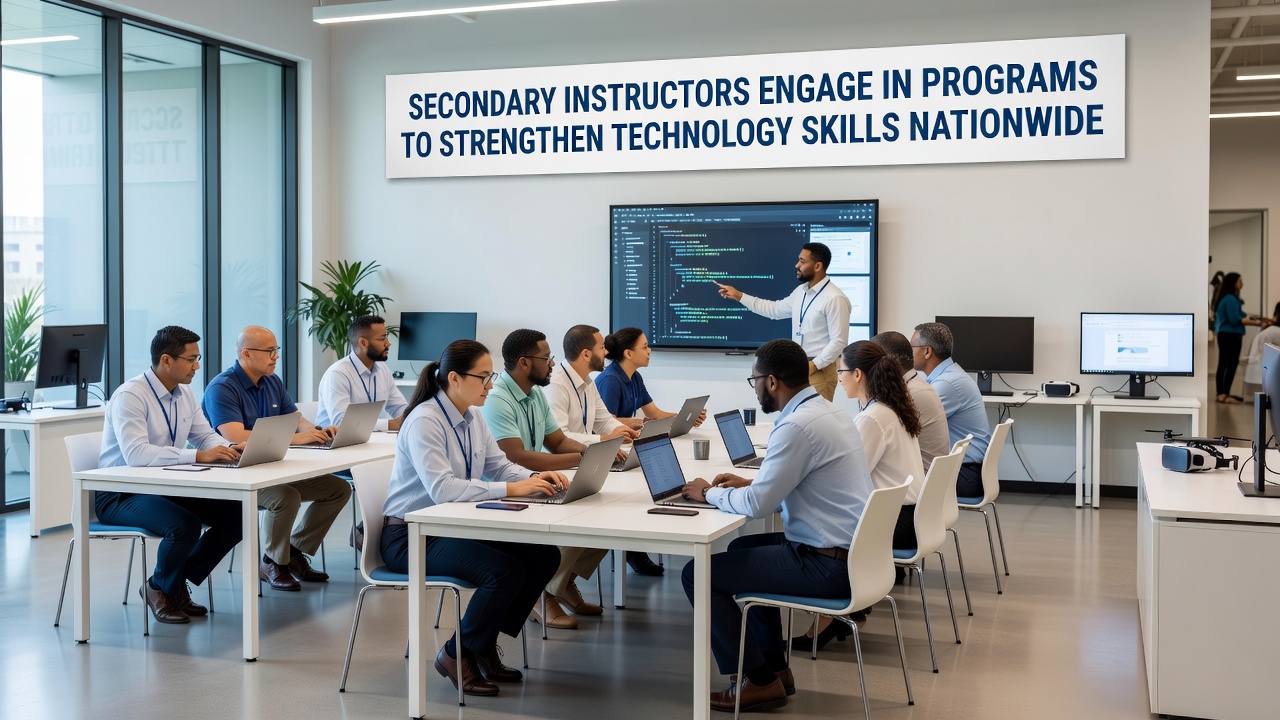
Many programs combine online modules with in-person workshops that meet during summer institutes and weekend intensives, allowing instructors to practice coding platforms, learning management systems, and data analytics tools without interrupting regular teaching duties. Participants often complete certification tracks that award micro-credentials recognized by district salary scales, and several states now tie these credentials to license renewal requirements.
Training content covers artificial intelligence applications for lesson planning, cybersecurity awareness for student data protection, and digital accessibility standards that meet federal compliance guidelines. Sessions frequently incorporate peer mentoring where experienced instructors demonstrate classroom implementations that newer participants adapt to their own subject areas.
September 2026 Cohort Launches
New cohorts scheduled to begin in September 2026 will emphasize emerging tools such as generative AI for personalized learning paths and virtual reality environments for science simulations; organizers report that registration opened in spring 2026 and filled within weeks at multiple regional sites. These programs receive support through allocations from the Every Student Succeeds Act and supplemental funding from private foundations that prioritize equity in rural and urban districts.
Observers note that instructors from districts with limited broadband access receive loaned devices and cloud-based resources during training periods, which reduces barriers that previously limited participation. Follow-up coaching continues for twelve months after initial workshops, providing ongoing feedback on technology integration projects that instructors develop for their students.
Evidence of Impact and Evaluation
Research from the U.S. Department of Education indicates measurable gains in teacher confidence with digital tools after program completion, while student outcome data collected by participating districts shows corresponding improvements in engagement metrics for classes that incorporate newly learned strategies. Independent evaluations track changes through pre- and post-assessments plus classroom observation protocols that document shifts in instructional practice over time.
One study released by the OECD examined similar national efforts in multiple countries and found that sustained coaching beyond initial workshops produced stronger long-term adoption rates than one-time training events alone. Those findings have influenced design choices for current U.S. programs that now allocate resources for extended support networks.
Regional Variations and Partnerships
State-level implementations differ according to local priorities, with some emphasizing STEM applications while others focus on cross-curricular digital literacy that reaches English language arts and social studies departments. Partnerships with community colleges and university education departments supply instructors and host regional training centers, creating pathways for instructors to earn graduate credits alongside professional certificates.
District leaders coordinate with technology vendors to provide discounted software licenses for program graduates, which lowers implementation costs once teachers return to their schools. Reports from participating sites document increased collaboration across departments as instructors share resources developed during training sessions.
Conclusion
Nationwide programs continue to expand access to technology skill development for secondary instructors through coordinated federal, state, and local efforts that deliver training, credentials, and ongoing support. Participation data and evaluation results demonstrate consistent patterns of skill acquisition and classroom application across diverse geographic regions. As new cohorts prepare for September 2026 start dates, the infrastructure supporting these initiatives remains focused on measurable outcomes tied to student learning environments.