Mia Zimmermann · 12 October 2026
Poland Weighs Adjustments to Overseas Student Entry Protocols as Campus Wellness Initiatives Gain Ground
Polish authorities continue reviewing entry requirements for overseas students, with discussions centered on streamlined visa processes alongside expanded health and support services at universities nationwide, and data from the Ministry of Education and Science shows international enrollment reached 89,000 in the 2025 academic year, marking steady growth from prior periods.
Current Entry Framework and Proposed Adjustments
Existing protocols require prospective students to submit proof of acceptance, financial resources, and health insurance before obtaining a national visa, yet officials have begun evaluating modifications that could shorten processing times for applicants from select countries while introducing enhanced background checks in specific cases, and these proposals emerged during interagency meetings held in October 2026, where representatives from the Ministry of Foreign Affairs and border services examined ways to balance accessibility with security considerations.
Researchers at the University of Warsaw documented that average visa approval times currently span four to six weeks for most applicants, prompting calls for digital submission portals that would integrate directly with university admissions systems, and similar systems operate successfully in several European Union member states, allowing faster verification of academic credentials and financial documentation.
Campus Wellness Programs Expand Across Institutions
Parallel developments show universities allocating increased resources to mental health counseling, stress management workshops, and physical activity programs designed specifically for students adjusting to life in Poland, and figures released by the Conference of Rectors of Academic Schools in Poland indicate that 62 percent of public universities now maintain dedicated wellness offices compared with 41 percent three years earlier.
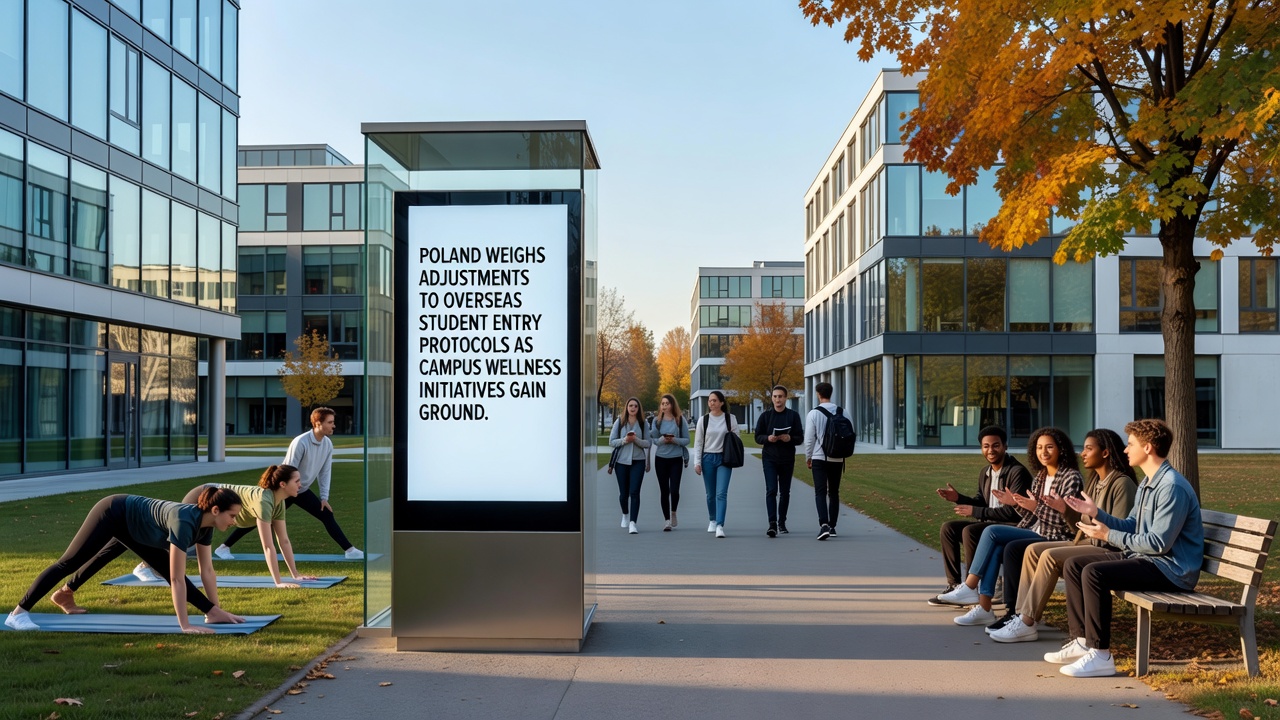
These initiatives include peer support networks, access to multilingual therapists, and integration activities that connect incoming students with local communities, while data compiled by the European Commission on student mobility highlights that institutions offering comprehensive support services report higher retention rates among overseas enrollees, and Polish universities have begun adapting these models to address language barriers and cultural transition challenges.
Interconnection Between Entry Policies and Student Support
Policy analysts observe that revised entry procedures could incorporate preliminary assessments of student well-being needs, allowing universities to prepare support services before arrival, and one pilot program at Jagiellonian University tested pre-arrival orientation modules delivered through partner institutions abroad, resulting in smoother initial adjustment periods according to internal evaluations.
Coordination between immigration authorities and campus health centers remains limited at present, although working groups formed in late 2026 aim to establish information-sharing channels that respect privacy regulations while enabling proactive outreach, and such measures reflect broader European trends documented in OECD education reports on international student integration.
Regional Variations and Institutional Responses
Universities in major cities such as Warsaw, Kraków, and Wrocław have advanced furthest in wellness infrastructure, whereas regional institutions focus on partnerships with local healthcare providers to extend services, and enrollment data reveals that technical universities attract the largest share of overseas students, particularly from Ukraine, Belarus, and Asian countries, creating demand for targeted language and cultural support alongside standard academic advising.
Administrators at Gdańsk University of Technology implemented mandatory wellness check-ins during the first semester for all international arrivals, and similar practices appear under consideration at several other technical campuses following positive feedback from participants who noted reduced isolation and improved academic performance.
Conclusion
Developments in entry protocol adjustments and campus wellness expansion continue unfolding through coordinated efforts among government agencies and higher education institutions, with October 2026 meetings providing a framework for potential implementation timelines extending into the following year, and ongoing monitoring of enrollment trends alongside retention statistics will inform further refinements to both policy areas.