Mia Zimmermann · 14 September 2026
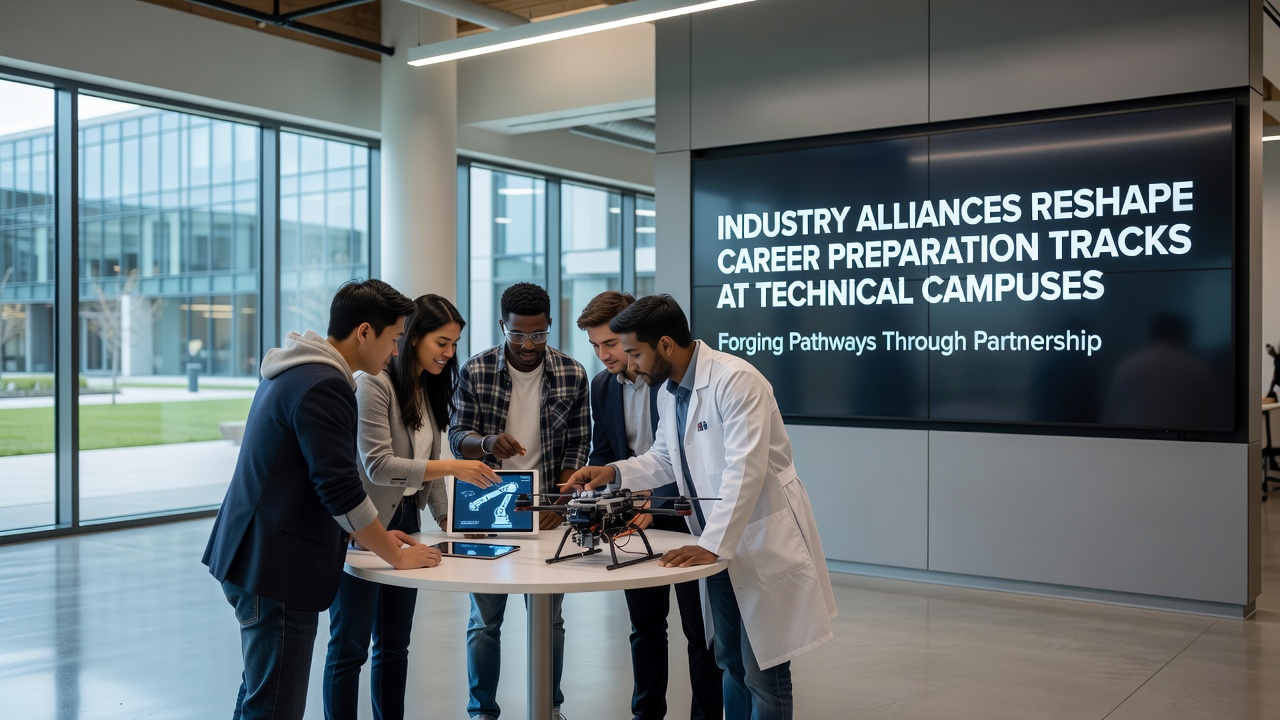
Industry Alliances Reshape Career Preparation Tracks at Technical Campuses
Technical campuses have expanded partnerships with corporations and trade associations in recent years, and these alliances now guide the structure of internship sequences, capstone projects, and certification pathways that students follow from the first year onward. Data from multiple higher-education tracking systems show that more than 60 percent of engineering and computing programs at specialized institutions list at least one formal industry partner by the 2025–2026 academic year.Joint Curriculum Design Gains Ground
Faculty teams at several technical universities now meet quarterly with employer advisory boards to adjust course sequences, and the changes often appear in syllabi within a single semester. Representatives from semiconductor manufacturers, for instance, introduced modules on advanced packaging techniques that replaced older fabrication labs at three Midwest campuses starting in fall 2025. Students complete the revised tracks and receive stackable micro-credentials that the partner companies have already agreed to recognize during hiring reviews.
Similar arrangements exist in renewable-energy programs where turbine operators supply real-time sensor data for student analysis, and the datasets arrive through secure portals maintained by the firms themselves. Observers note that these shared resources reduce the lag between classroom examples and current field practices.
Apprenticeship-Style Pathways Expand
Cooperative education calendars have lengthened at many institutions, and students now alternate between campus terms and paid industry placements that span two or three semesters. Records kept by the National Center for Education Statistics indicate that technical campuses operating under formal alliance agreements reported a 22 percent rise in six-month post-graduation employment rates between 2023 and 2025. The same datasets show that participating students accumulate an average of 1,200 hours of documented work experience before receiving their degrees.
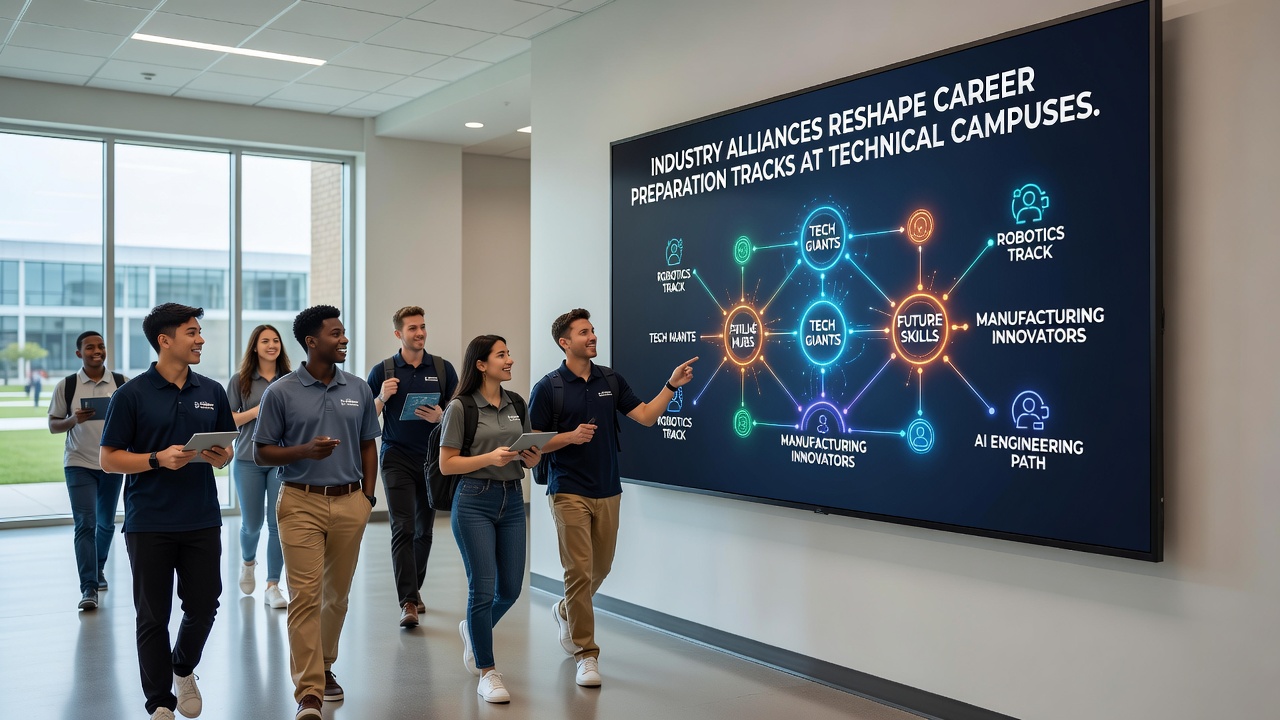
One aerospace alliance in the Pacific Northwest coordinates a rotational schedule that moves undergraduates through design, testing, and supply-chain divisions at three different firms. Program administrators track completion rates and feed the figures back to faculty so that subsequent cohorts receive targeted preparation before each rotation begins.
September 2026 Milestones
Planning documents released in early 2026 list a series of joint career fairs scheduled for September at campuses in the United States, Canada, and Australia. Organizers expect more than 180 companies to conduct on-site interviews, and preliminary registration data suggest student participation will exceed prior years by roughly 15 percent. Career-services offices have begun publishing updated placement statistics each month so that alliance partners can adjust their recruitment targets accordingly.
Assessment and Credential Integration
Assessment rubrics now incorporate performance indicators supplied by industry reviewers, and these rubrics appear in both credit-bearing courses and non-credit boot camps. A consortium of automotive suppliers, for example, contributed evaluation criteria for battery-management projects that three technical universities adopted system-wide in spring 2026. Students who meet the thresholds receive digital badges that link directly to employer human-resource systems.
Researchers at several institutions have begun longitudinal studies to measure whether the integrated credentials correlate with faster advancement after graduation. Early findings, released in working papers during summer 2026, point to shorter times to first promotion among participants in the alliance tracks compared with peers in traditional programs.
Conclusion
Technical campuses continue to align program requirements with employer specifications through structured alliances that affect curriculum, work experience, and credentialing. September 2026 events will provide additional data points on placement volumes and skill alignment, while ongoing studies track longer-term career outcomes for graduates who complete the revised pathways.